2026 · 61st Venice Biennale · Fondazione Donà dalle Rose61ª Biennale di Venezia · Fondazione Donà dalle Rose第61届威尼斯双年展 · Fondazione Donà dalle Rose
Fissures of Light, Towers光之裂隙 · 塔楼
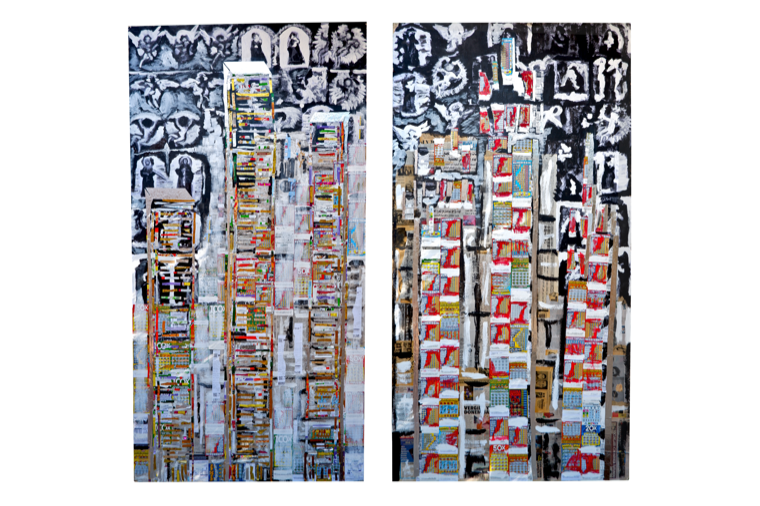
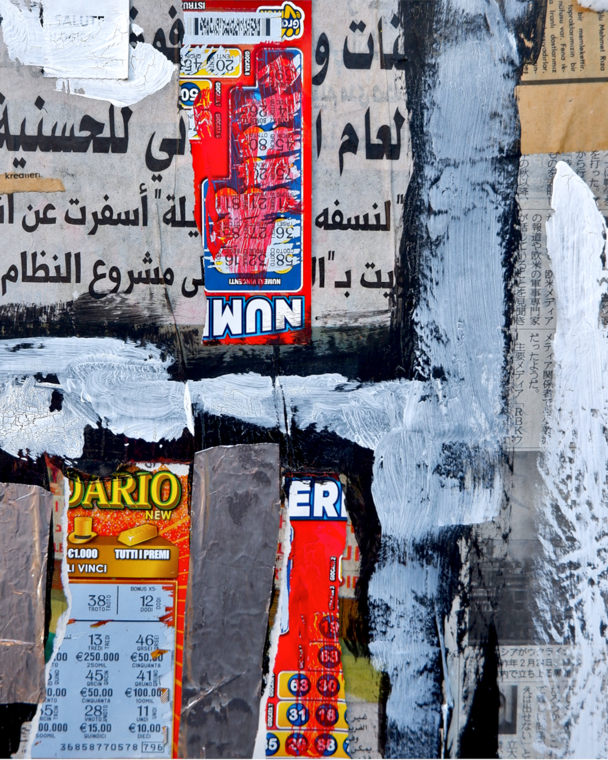
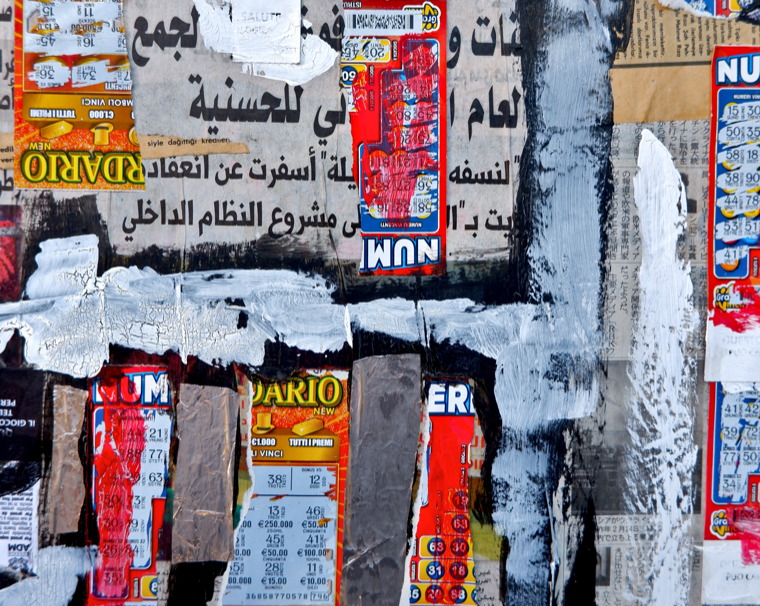
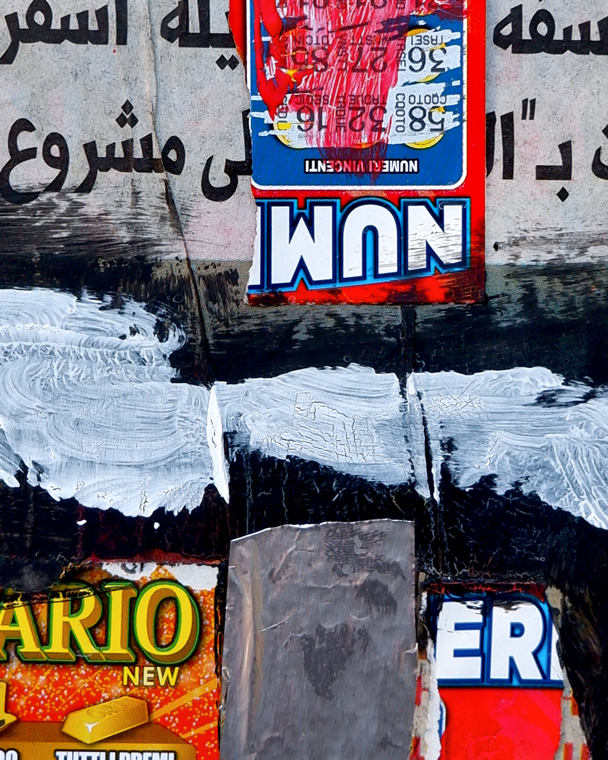
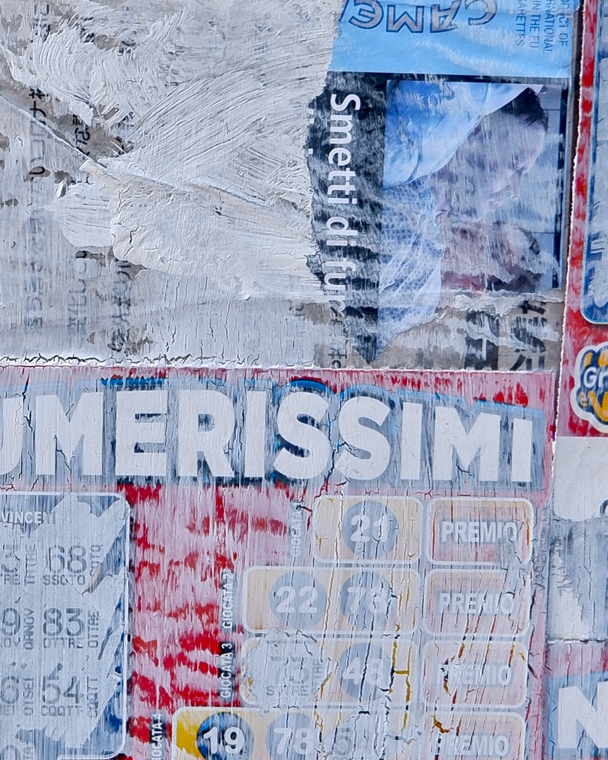
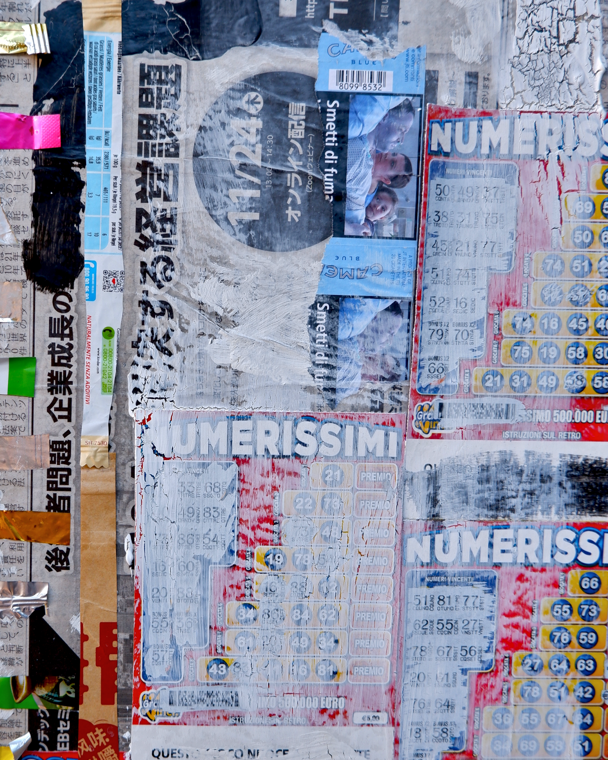
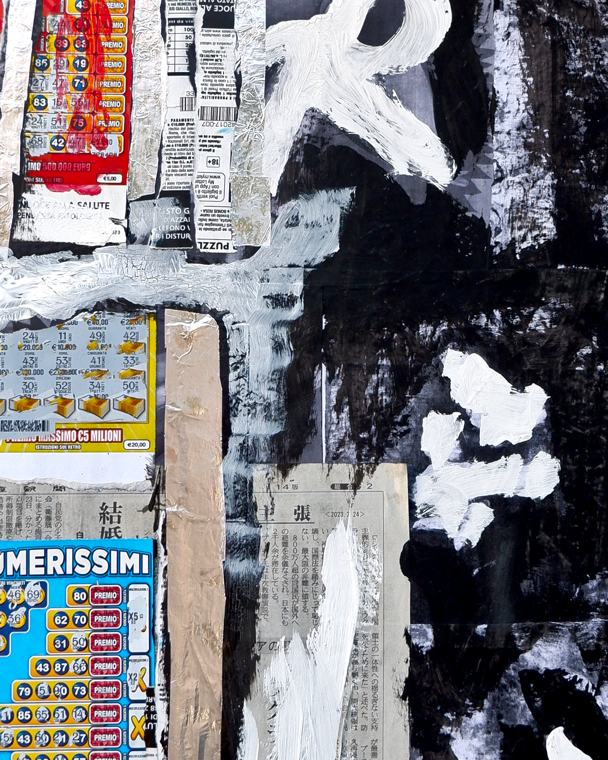
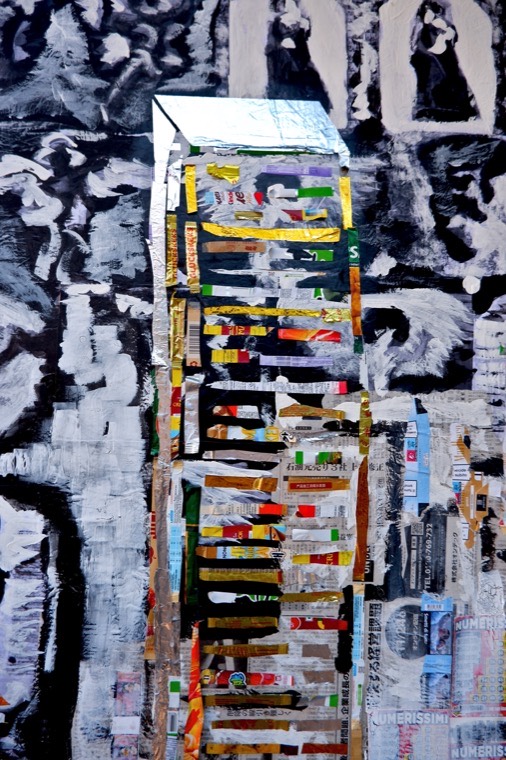
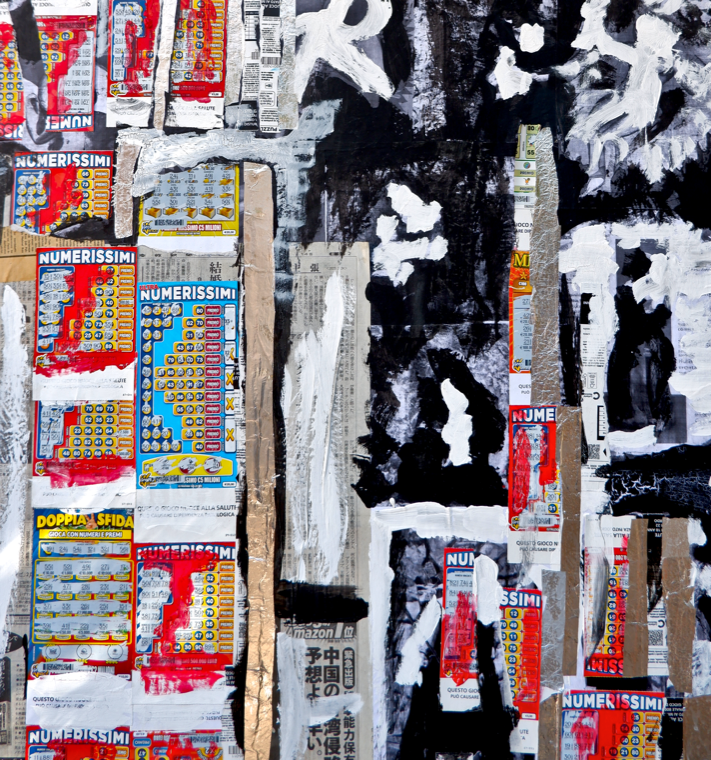
A diptych for the Tissali Arts & Culture collateral pavilion at the 61st Venice Art Biennale. Verticality becomes structural and symbolic, composite towers built from layered urban waste: scratch cards, lottery tickets, city debris aggregating into unstable, seductive architectures.
A contemporary reliquary: the city is not a place but an accumulation of promises and serialized desires. Over this material field, a black-and-white pictorial counter-field surfaces an archaic, half-legible sacred imagery, verticality no longer as ascent, but as the structural memory of an ancient tension.
Un dittico per il padiglione collaterale Tissali Arts & Culture alla 61ª Biennale di Venezia. La verticalità si fa strutturale e simbolica, torri composite costruite con stratificazioni di scarti urbani: gratta e vinci, biglietti del SuperEnalotto, residui che si aggregano in architetture instabili e seducenti.
Un reliquiario contemporaneo: la città non è luogo ma accumulo di promesse e desideri serializzati. Su questo campo materico affiora un controcampo pittorico in bianco e nero, un’iconografia sacra arcaica e illeggibile, la verticalità non più slancio, ma memoria strutturale di una tensione antica.
为第61届威尼斯双年展 Tissali Arts & Culture 平行展馆创作的双联作品。垂直性成为结构性与象征性的存在,由层层叠加的城市废弃物构筑而成的复合塔楼:刮刮乐、彩票、城市碎屑聚合为不稳定而诱人的建筑。
01ImagesImmagini图像
02In depthApprofondimento深入解读
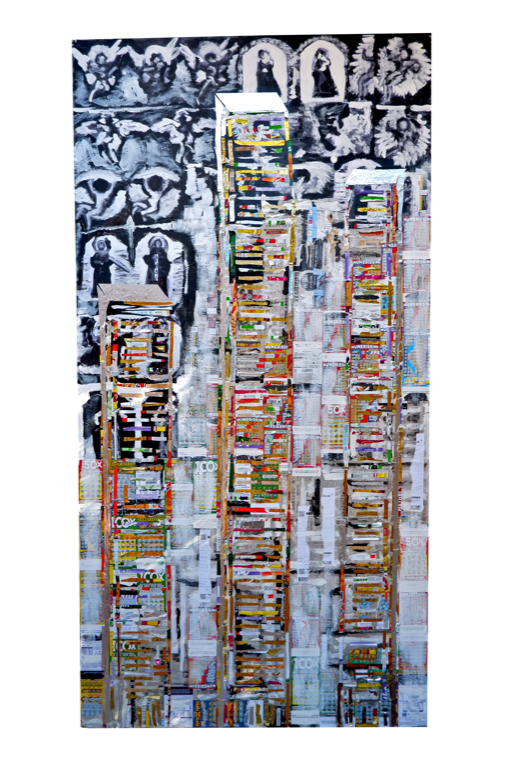
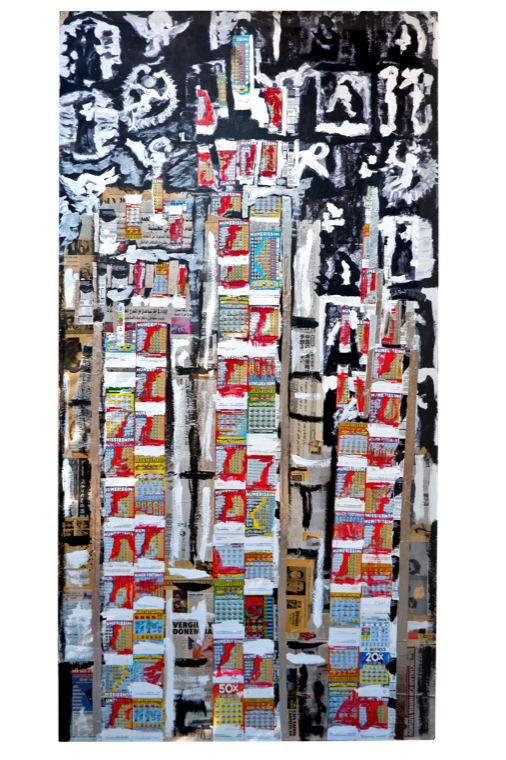
Towers (diptych), 2026 · Collage and mixed media on wood · 250 × 120 cm (each)
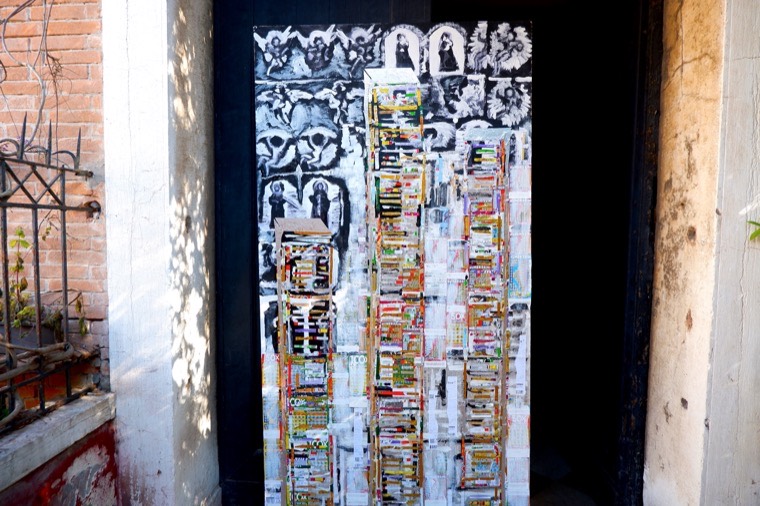
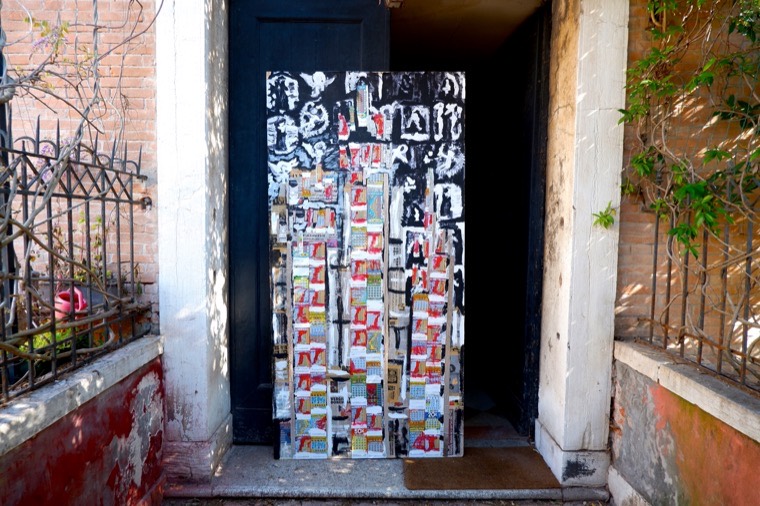
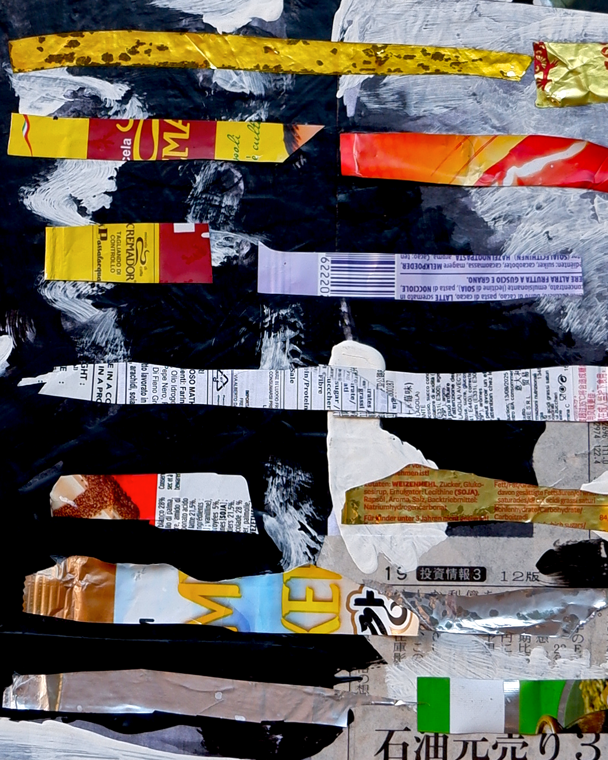
In this diptych, Leone Solia builds a visual system in which verticality takes on a structural and symbolic value, configured as an axis of tension between matter and image, between residue and icon. The surfaces are crossed by composite towers, obtained through layerings of waste materials, in particular fragments of scratch cards, SuperEnalotto lottery tickets and urban debris, which aggregate into unstable architectures, at once seductive and degraded.
These vertical forms, evoking both the profile of a city and that of a contemporary reliquary, do not merely represent an urban space: they embody its symbolic condition. Here the city is not a physical place, but an accumulation of promises, of statistical possibilities, of serialized desires. The scratch card, iconic device of chance and economic illusion, becomes the constructive module of a new, fragile monumentality, in which repetition replaces stone and consumption takes the place of memory. Onto this first, eminently material level, an opposite pictorial counter-field is grafted. The ground, worked in black and white, returns a constellation of images that recall an archaic iconographic repertoire: hieratic figures, silhouettes, fragments of a now-illegible sacred narrative. This is neither quotation nor nostalgic recovery, but a disturbed re-emergence, as if the collective visual memory surfaced through a process of erosion.
Within the diptych, a subtle rhythmic variation introduces a significant difference. In the first work, the relationship between the layers retains a certain transparency: the ground remains legible, and the vertical structures still seem in dialogue with it. In the second, on the contrary, the surface densifies, the colors saturate, and the image appears more compressed, almost in a state of congestion. Verticality multiplies and stiffens, suggesting a passage from a condition of tension to one of saturation. What emerges is a vision in which transcendence does not disappear, but is progressively absorbed and obscured by alternative value systems, founded on repetition, accumulation and promise. Solia’s works do not stage a conflict between sacred and profane, but rather a process of transformation: what once organized collective meaning survives today as a trace, while new forms of belief, economic, statistical, consumerist, occupy its space.
From this perspective, verticality is no longer an upward thrust, but the residue of an ancient tension, now reconfigured. Solia’s towers do not aspire to the sky: rather, they preserve its structural memory.
Towers (dittico), 2026 · Collage e tecnica mista su supporto ligneo · 250 × 120 cm (ciascuno)
In questo dittico, Leone Solia costruisce un sistema visivo in cui la verticalità assume un valore strutturale e simbolico, configurandosi come asse di tensione tra materia e immagine, tra residuo e icona. Le superfici sono attraversate da torri composite, ottenute tramite stratificazioni di materiali di scarto, in particolare frammenti di gratta e vinci, biglietti del SuperEnalotto e residui urbani, che si aggregano in architetture instabili, al contempo seducenti e degradate.
Queste forme verticali, che evocano tanto il profilo di una città quanto quello di un reliquiario contemporaneo, non si limitano a rappresentare uno spazio urbano: ne incarnano piuttosto la condizione simbolica. La città qui non è luogo fisico, ma accumulo di promesse, di possibilità statistiche, di desideri serializzati. Il gratta e vinci, dispositivo iconico della casualità e dell’illusione economica, diviene modulo costruttivo di una nuova monumentalità fragile, in cui la ripetizione sostituisce la pietra e il consumo prende il posto della memoria. Su questo primo livello, eminentemente materico, si innesta un controcampo pittorico di segno opposto. Il fondo, lavorato in bianco e nero, restituisce una costellazione di immagini che rimandano a un repertorio iconografico arcaico: figure ieratiche, silhouettes, frammenti di una narrazione sacra ormai illeggibile. Non si tratta di citazione né di recupero nostalgico, ma di una riemersione disturbata, come se la memoria visiva collettiva affiorasse attraverso un processo di erosione.
All’interno del dittico, una sottile variazione ritmica introduce una differenza significativa. Nella prima opera, la relazione tra i livelli mantiene una certa trasparenza: il fondo rimane leggibile, e le strutture verticali sembrano ancora in dialogo con esso. Nella seconda, al contrario, la superficie si densifica, i colori si saturano, e l’immagine appare più compressa, quasi in stato di congestione. La verticalità si moltiplica e si irrigidisce, suggerendo un passaggio da una condizione di tensione a una di saturazione. Ne emerge una visione in cui la trascendenza non scompare, ma viene progressivamente inglobata e oscurata da sistemi di valore alternativi, fondati sulla ripetizione, sull’accumulo e sulla promessa. Le opere di Solia non mettono in scena un conflitto tra sacro e profano, quanto piuttosto un processo di trasformazione: ciò che un tempo organizzava il senso collettivo sopravvive oggi come traccia, mentre nuove forme di credenza, economiche, statistiche, consumistiche, ne occupano lo spazio.
In questa prospettiva, la verticalità non è più slancio verso l’alto, ma residuo di una tensione antica, ormai riconfigurata. Le torri di Solia non aspirano al cielo: ne conservano, piuttosto, la memoria strutturale.
Towers(双联作),2026 · 木板拼贴与综合材料 · 250 × 120 cm(每件)
在这件双联作中,Leone Solia 构建了一个视觉系统,垂直性在其中承担起结构性与象征性的价值,成为物质与图像、残余与圣像之间张力的轴心。画面表面贯穿着由废弃材料层叠而成的复合塔楼,尤其是刮刮乐彩票、SuperEnalotto 彩券碎片与城市残余物,它们聚合成不稳定的建筑,既充满诱惑又带着颓败之感。
这些垂直形态,既让人联想到城市的轮廓,也令人想起当代圣髑匣的形制,它们并不只是再现一个城市空间:而是体现了这一空间的象征状况。此处的城市并非物理场所,而是承诺、统计概率与被序列化欲望的积累。刮刮乐这一象征偶然与经济幻觉的标志性装置,成为一种新的、脆弱的纪念性的构筑模块,重复取代了石材,消费取代了记忆。在这第一个高度物质性的层面之上,嫁接着一个方向相反的绘画性对位场域。以黑白处理的底层,浮现出一整片指向古老图像谱系的星丛:庄严肃穆的人物、剪影、一段如今已难以辨读的神圣叙事的碎片。这并非引用,也非怀旧式的回收,而是一种被扰动的再浮现,仿佛集体视觉记忆正通过侵蚀的过程重新浮出水面。
在这幅双联作内部,一种微妙的节奏变化引入了一处重要差异。在第一件作品中,各层之间的关系仍保有一定的透明度:底层依然可辨,垂直结构似乎仍与之对话。而在第二件作品中,表面则愈发致密,色彩趋于饱和,图像显得更为压缩,几近拥堵之态。垂直性不断增殖、僵化,暗示着从紧张状态向饱和状态的过渡。由此浮现出一种视野:超越性并未消失,而是被建立在重复、积累与承诺之上的另一套价值体系逐渐吞没、遮蔽。Solia 的作品并未呈现神圣与世俗之间的冲突,而更像是一场转化的过程:曾经组织集体意义的事物,如今仅以痕迹的形式留存,而经济、统计与消费主义的新型信仰形式,正占据着它的位置。
从这一视角看,垂直性不再是向上的冲力,而是一种古老张力的残余,如今被重新配置。Solia 的塔楼并不渴望触及天空,它们保存的,毋宁说是天空的结构性记忆。